
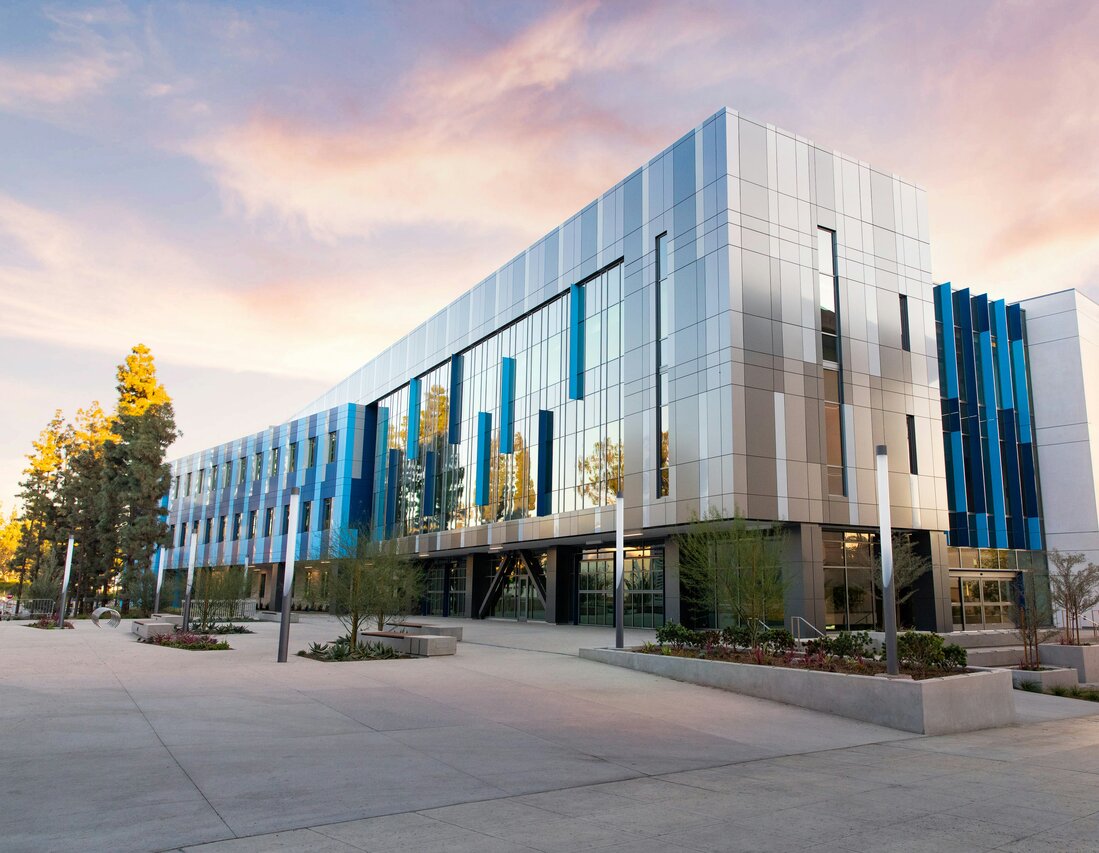
Commercial buildings are complex feats of engineering, designed to safely house businesses, institutions, and public spaces for decades, sometimes centuries. Unlike residential homes, they often bear heavier loads, span larger distances, and are subject to more stringent regulations.
A single structural oversight in their design can lead to catastrophic failure, significant financial loss, and even loss of life. For anyone involved in the commercial construction process – from developers and architects to structural engineers and contractors – understanding and actively avoiding common structural mistakes is paramount.
Here are 10 critical structural design considerations where errors frequently occur, and how to prevent them:
Inadequate Site Investigation and Geotechnical Analysis
The Mistake: Rushing or skipping comprehensive soil testing and site analysis. Assuming uniform soil conditions across a large commercial footprint, or relying on outdated or insufficient geotechnical reports. This can lead to foundation design based on incorrect assumptions.
Why it’s Critical: The soil is the ultimate support for the entire building. Unforeseen issues like expansive clays, compressible soils, high water tables, or undetected underground anomalies (e.g., old fill, abandoned utilities) can cause differential settlement, foundation cracking, and structural instability.
How to Avoid It: Invest in a thorough geotechnical investigation by a qualified engineer early in the design phase. Obtain multiple borings across the site, especially for larger or unusually shaped buildings. Ensure the report provides detailed recommendations for foundation type, bearing capacity, and any necessary ground improvement. Communicate these findings diligently to the structural engineer.
Underestimating or Miscalculating Loads
The Mistake: Incorrectly estimating dead loads (weight of building materials), live loads (occupants, furniture, equipment), or environmental loads (snow, wind, seismic). This can result from using generic values instead of site-specific data, or not accounting for future changes in occupancy or use.
Why it’s Critical: Every structural element, from the roof deck to the foundation, must be designed to safely carry the maximum expected loads. Underestimation leads to undersized members that can deflect excessively, crack, or fail. Overestimation, while safer, can lead to unnecessary material costs and an overly heavy structure.
How to Avoid It: Meticulously calculate all dead, live, and environmental loads according to current building codes (e.g., International Building Code – IBC, ASCE 7). Account for regional variations in snow and wind loads, and perform detailed seismic analysis for applicable zones. If the building’s future use might change (e.g., from office to light manufacturing), consider designing for the higher potential loads upfront.
Ignoring Lateral Load Resistance (Wind and Seismic)
The Mistake: Focusing primarily on gravity loads and neglecting the crucial design for lateral forces from wind and earthquakes. This often manifests as insufficient shear walls, braced frames, or inadequate diaphragm connections.
Why it’s Critical: Lateral loads can cause a building to sway, rack, or even collapse horizontally. Without a clear and continuous “load path” to transfer these forces from the roof and floors down to the foundation, the building becomes vulnerable.
How to Avoid It: Integrate lateral load resistance early into the architectural and structural design. Clearly define the lateral force resisting system (e.g., shear walls, moment frames) and ensure adequate stiffness and strength. Pay meticulous attention to connections between elements, as these are often the weakest links in lateral load transfer. Perform dynamic analysis for taller or irregularly shaped structures in seismic zones.
Poor Connection Details
The Mistake: Inadequate, unclear, or overlooked detailing of connections between structural members (e.g., beam-to-column, column-to-foundation, wall-to-roof). This includes insufficient fasteners, weld sizes, or rebar laps.
Why it’s Critical: A structure is only as strong as its weakest connection. Even if individual members are perfectly sized, a poorly designed or executed connection can lead to localized failure, compromising the entire system. Common issues include insufficient embedment, eccentric loading, or inadequate transfer of forces.
How to Avoid It: Detail all connections thoroughly on structural drawings, specifying material, size, quantity, and precise placement of fasteners, welds, and reinforcement. Utilize standard connection details where appropriate, but customize for unique conditions. Collaborate closely with fabricators and erectors to ensure constructibility of connection details. Conduct rigorous quality control during construction to verify correct installation.
Lack of Structural Redundancy
The Mistake: Designing a structure with a single point of failure, where the failure of one critical element could lead to progressive collapse of a larger portion or the entire building.
Why it’s Critical: Redundancy provides alternative load paths in case a primary structural element is damaged or fails due to an unforeseen event (e.g., localized fire, accidental impact, material defect). It acts as a safety net, enhancing the robustness and resilience of the building.
How to Avoid It: Aim for multiple load paths where feasible. For example, in a multi-story building, use a system of columns and beams that can redistribute loads if one column is compromised. Incorporate continuity in steel connections and adequately lap concrete reinforcement. Consider tying forces in slabs to provide alternative load transfer mechanisms.
Ignoring Differential Settlement
The Mistake: Designing foundations for buildings with varying loads or on differing soil conditions without accounting for potential differential settlement (uneven sinking of parts of the foundation). This is common in buildings with both heavy and light sections, or where new construction abuts existing structures.
Why it’s Critical: Uneven settlement can induce significant stresses in the superstructure, leading to cracking of walls, floors, and finishes, and potentially compromising the integrity of the structural frame.
How to Avoid It: Analyze predicted settlements based on the geotechnical report and foundation design. Use deep foundations (piles, caissons) to bear on more stable strata if shallow foundations are prone to excessive differential settlement. Incorporate expansion joints or flexible connections where sections with significantly different loads or foundation types meet.
Poor Coordination Between Disciplines
The Mistake: Lack of seamless communication and coordination between structural engineers, architects, mechanical, electrical, plumbing (MEP) engineers, and civil engineers. This can lead to clashes between structural elements and building systems, or overlooked spatial requirements for ducts, pipes, and conduits.
Why it’s Critical: A beautiful architectural design is useless if it’s not structurally feasible or if HVAC ducts have to be threaded through beams, compromising their integrity. Conversely, an ideal structural layout might clash with essential MEP systems, leading to costly redesigns, field modifications, or reduced functional space.
How to Avoid It: Implement Building Information Modeling (BIM) to facilitate clash detection and early coordination. Hold regular interdisciplinary design meetings. Ensure clear communication channels and shared documentation platforms. Architects should understand structural limitations, and engineers should respect architectural intent while ensuring structural viability.
Overlooking Long-Term Performance and Durability
The Mistake: Designing solely for initial strength and code compliance, without considering factors that affect long-term durability, such as corrosion, creep, shrinkage, fatigue, and fire resistance.
Why it’s Critical: A structure that performs well on day one might degrade over time if long-term effects are not addressed. Corrosion of steel, creep in concrete (slow deformation under sustained load), or inadequate fireproofing can significantly reduce a building’s lifespan and safety.
How to Avoid It: Specify appropriate material protection (e.g., galvanization, coatings for steel), adequate concrete cover for rebar, and proper detailing for drainage to prevent moisture intrusion. Account for creep and shrinkage in concrete design. Design for fire resistance as per code, including fireproofing materials and fire-rated assemblies.
Misuse or Over-Reliance on Software
The Mistake: Treating structural analysis software as a “black box” – inputting data without fully understanding the underlying principles, assumptions, or limitations of the program. This can lead to accepting erroneous results without critical review.
Why it’s Critical: Software is a tool, not a substitute for engineering judgment. Incorrect input data, inappropriate modeling of boundary conditions, or misinterpretation of output can lead to unsafe designs.
How to Avoid It: Engineers must have a strong theoretical understanding of structural mechanics. Validate software results with hand calculations or simplified models. Understand the software’s capabilities and limitations. Implement robust quality control and peer review processes for all designs.
Neglecting Constructibility and Practicality
The Mistake: Designing highly complex or impractical structural elements that are difficult, expensive, or dangerous to build. This often occurs when designers lack practical construction experience or fail to consult with contractors during the design phase.
Why it’s Critical: Designs that are not constructible lead to delays, cost overruns, frustrated contractors, and potentially unsafe construction practices as crews try to “make it work.”
How to Avoid It: Embrace a constructible design approach. Keep details simple where possible. Consider standard material sizes and construction methods. Engage experienced contractors or construction managers for constructibility reviews early in the design process. Provide clear, comprehensive, and unambiguous construction documents.
Designing a safe, efficient, and durable commercial building requires meticulous attention to detail and a holistic understanding of structural principles. By proactively addressing these 10 common mistakes, design teams can significantly enhance the quality, safety, and longevity of commercial structures, ensuring they stand as testaments to sound engineering for generations to come.
Questions about your project? Contact us today!